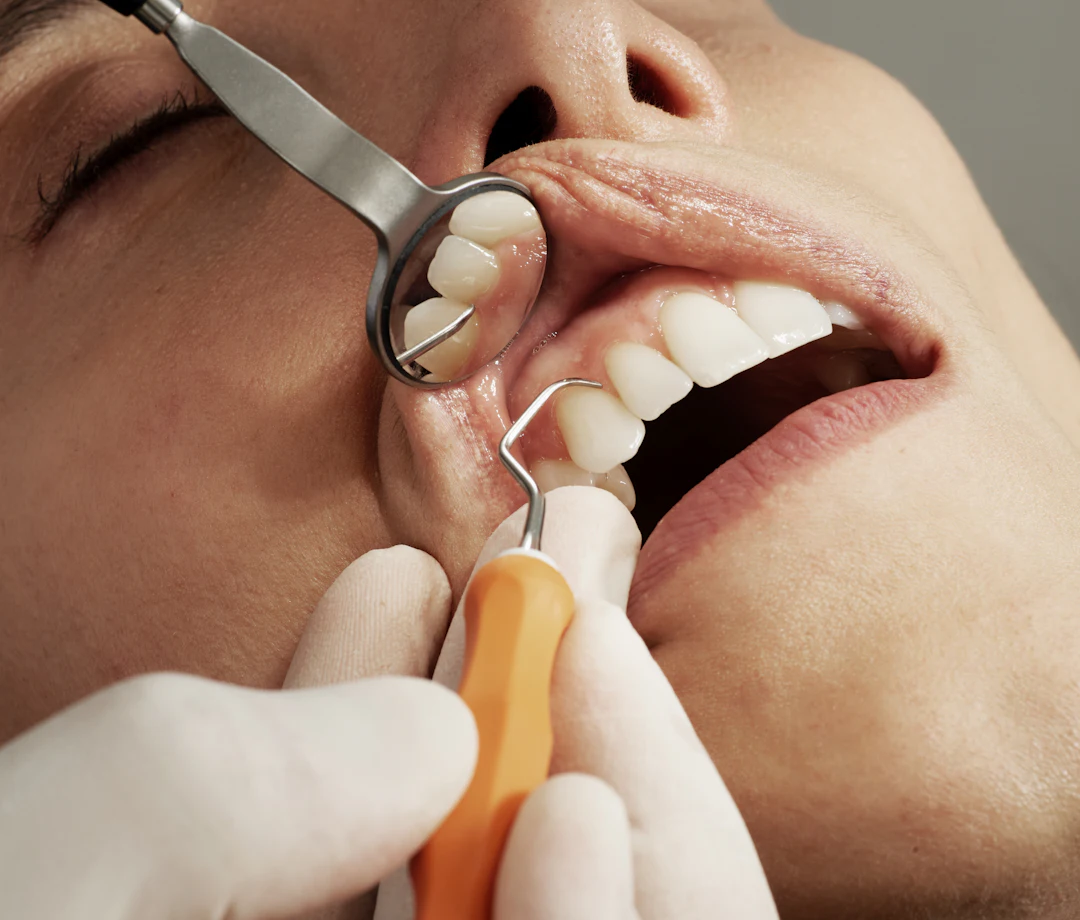
Tartar and your gums
Plaque is the soft film that builds up on your teeth. If you leave it there, it hardens into tartar.
You cannot brush tartar off. It irritates your gums and can lead to gum disease.
Signs you are due
- Gums that bleed when you brush
- Bad breath that keeps returning
- Yellow or brown build-up near the gum line
- Stains from tea, karak or smoking
What happens at your visit
Your dentist or hygienist scales away tartar with small instruments. Next comes a polish to smooth the surface and lift surface stains.
You may hear a scraping or buzzing sound, and most visits are short. Tell us if your teeth are sensitive and we can go slower.
Why bleeding gums matter
Gums bleed when they are inflamed. Many people brush less in that spot, which makes the problem worse.
Keep brushing gently and book a cleaning. If gum disease goes untreated, you can lose bone around your teeth.
Keeping your teeth clean at home
Brush twice a day for two minutes. Clean between your teeth once a day with floss or small brushes.
Wearing braces? Plaque collects around brackets, so ask us how often to book.
Scale and polish or deep cleaning
A scale and polish cleans the teeth above and just below the gum line.
If gum disease has formed pockets around the teeth, you may need a deeper clean under the gum. Your dentist will measure your gums and explain.
Fluoride application
Your dentist may paint fluoride varnish on your teeth after a clean. It strengthens enamel and helps prevent decay.
It suits children and adults who are at higher risk of cavities.
Smoking and shisha
Both stain teeth and raise the risk of gum disease. Shisha smoke still reaches your gums, even through water.
Smokers may need cleans more often.
Cleaning around braces and other dental work
Brackets, bridges and crowns trap plaque in new places. Tell us about any dental work when you book.
We can show you which brushes reach the hard spots.
Before your visit
- Brush and floss as usual that morning
- Bring a list of any medicines you take
- Tell us if you are pregnant or have a heart condition
- Mention any teeth that feel sensitive
After your cleaning
Your gums may feel tender and bleed a little for a day. Keep brushing gently.
Your teeth will feel smoother, and may be a little sensitive to cold for a day or two.
Bad breath that keeps coming back
It often starts with plaque around the gums and on the tongue. A cleaning removes the build-up, and your dentist checks for gum disease or decay.
Brush your tongue gently each night as well as your teeth.