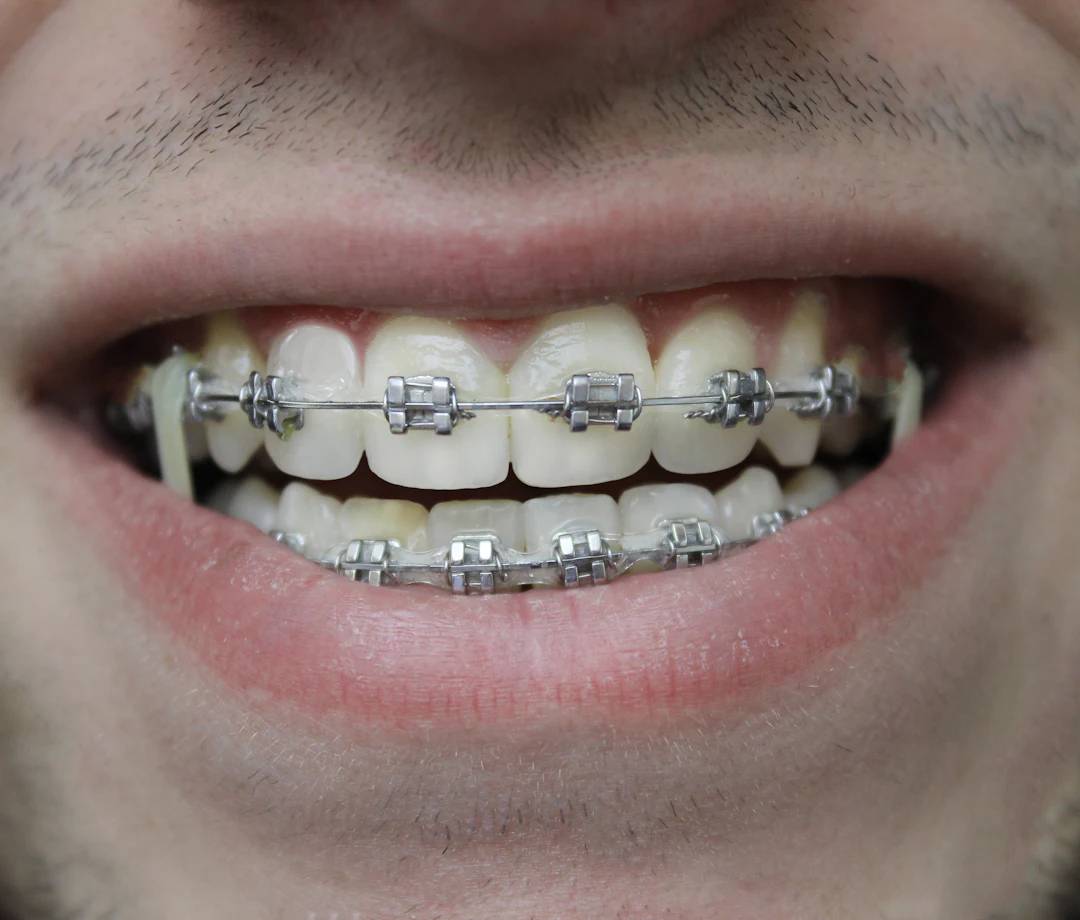
Problems braces can fix
- Crowded or overlapping teeth
- Gaps between teeth
- An overbite or underbite
- Teeth that do not meet when you bite
Your three options
| Metal | Ceramic | Clear aligners | |
|---|---|---|---|
| Look | Visible | Blends with teeth | Almost invisible |
| Remove to eat? | No | No | Yes |
| Suits | Most cases | Adults and teens who want less metal | Milder cases, disciplined wearers |
Your dentist will tell you which ones suit your teeth. Some bites need fixed braces.
How treatment runs
- First exam Your dentist looks at your teeth and takes X-rays and photos.
- Your plan You hear what will move, which option fits and how long it should take.
- Fitting Your dentist bonds the brackets on. Plan for a longer first visit.
- Adjustments You come in about every four to eight weeks.
- Retainers Once the braces come off, a retainer holds your new position.
Fitting visits around work
Braces mean regular visits for a year or more. We open until 9 PM, so you can book after your shift or your drive back from Dubai or Sharjah.
Eating with braces
Avoid hard or sticky food that can knock a bracket off. Nuts, toffee and hard bread are the usual trouble.
Cut fruit into small pieces. Brush after meals, and ask us to show you how to clean under the wire.
Your orthodontist
Braces at our clinic are planned by Dr J Ashok, our consultant orthodontist. Dr Ashok holds BDS, MDS and FAGE qualifications and is a Fellow of the Pierre Fauchard Academy.
Dr Ashok has 33 years of experience. Areas of expertise include Class 1, 2 and 3 malocclusion, canine impactions, micro implants and buccal screws.
What happens at the assessment
Your orthodontist looks at how your teeth meet and how your jaws line up. You may need X-rays of the whole mouth and the side of the head.
Photos and scans or impressions record your starting point. Your orthodontist uses them to plan each movement.
You leave knowing which options suit you, roughly how long treatment takes and what each step involves.
Extra help for harder cases
Some teeth need more than brackets and a wire to move.
- Micro implants are tiny temporary screws placed in the bone. They give the braces something firm to pull against.
- Buccal screws sit on the outer side of the back jaw and help with larger movements.
- Elastics are small rubber bands you change each day. They help line up the top and bottom teeth.
Your orthodontist will tell you if you need any of these, and why.
Braces for children and teens
Many orthodontists suggest a first check at around age seven. Some bite problems are easier to guide while the jaw is still growing.
Not every child needs treatment that early. Often the check just sets a good time to start.
Looking after your teeth during treatment
Plaque trapped around brackets can leave white marks on teeth. Brush after meals, use small interdental brushes and keep up your cleaning visits.
If a bracket breaks, call us. Missed adjustment visits can make treatment take longer.